


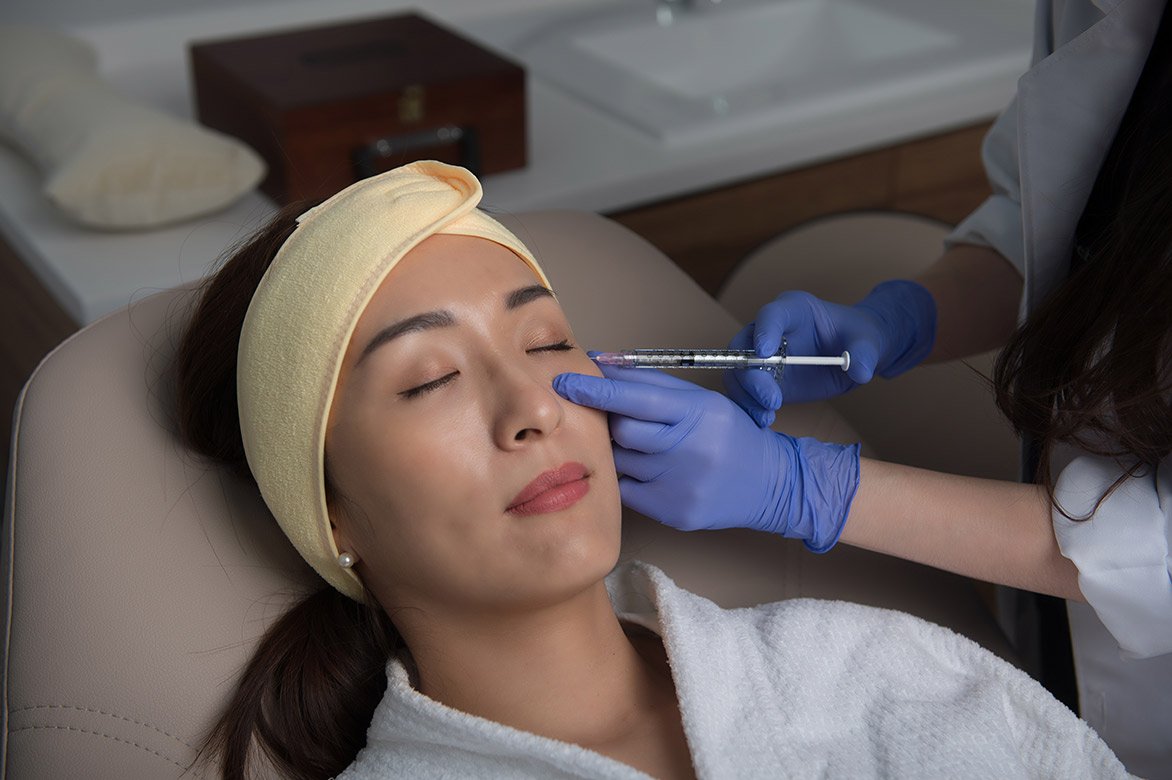
The aesthetic industry generates $6.8 billion annually from patients choosing between Sculptra’s gradual collagen stimulation and hyaluronic acid fillers’ immediate volume replacement, yet 58% select inappropriate treatments for their specific aging patterns, wasting thousands on products that address symptoms rather than causes of facial aging. This analysis compares the fundamental differences between biostimulators and traditional fillers, revealing which concerns each treatment genuinely addresses, when combination approaches prove superior to single modalities, and how to select treatments based on individual aging patterns rather than marketing promises—helping Edmonton patients invest in treatments that actually achieve their aesthetic goals rather than following trends.
Table of Contents:
- The Problem: Why Choosing Wrong Products Wastes Money Without Solving Concerns
- What to Consider: Mechanism Differences, Result Types, and Longevity Factors
- How to Choose: Assessment Framework for Volume Loss vs Skin Quality Needs
- Marlee Patricia Aesthetics’ Strategic Treatment Selection
- Frequently Asked Questions
The Problem: Why Choosing Wrong Products Wastes Money Without Solving Concerns
The Mechanism Misunderstanding
Patients requesting “filler” rarely understand the fundamental difference between adding external volume with hyaluronic acid versus stimulating internal collagen production with Sculptra, leading to selection of treatments that fail to address their actual concerns. The terminology confusion begins with providers using “filler” generically for all injectable volumizers despite completely different mechanisms, creating expectations that biostimulators cannot meet while missing opportunities where they excel.
Hyaluronic acid fillers work through simple volume replacement—the gel physically occupies space where natural volume disappeared. Like inflating a deflated balloon, HA filler provides immediate correction visible before leaving the treatment chair. The product attracts water, creating additional fullness over 2-3 weeks. This mechanical filling addresses specific deficits but doesn’t improve surrounding tissue quality. Results last 6-18 months depending on product and location before enzymatic breakdown returns appearance to baseline.
Sculptra operates through entirely different biological mechanisms that 73% of patients don’t comprehend even after consultation. Poly-L-lactic acid particles trigger inflammatory cascades recruiting fibroblasts. These cells produce new collagen over 3-6 months, gradually thickening dermis and restoring volume from within. The improvement encompasses skin quality, texture, and elasticity beyond simple inflation. Results develop slowly but last 2+ years through actual tissue regeneration rather than temporary filling.
The mechanism confusion leads to mismatched expectations:
- Patients choosing Sculptra expect immediate gratification
- Those selecting HA filler anticipate skin quality improvement
- Providers recommending based on profit rather than mechanism
- Marketing obscuring differences to simplify sales
- Cost comparisons ignoring longevity variations
The collagen production science demonstrates that understanding mechanism differences determines treatment satisfaction more than technical execution quality.
The Timeline Expectation Mismatch
The aesthetic industry’s emphasis on immediate transformation creates pressure for instant results that biological collagen stimulation cannot provide, causing 67% of Sculptra patients to abandon treatment before achieving desired outcomes while HA filler patients accept temporary solutions requiring constant maintenance. This timeline mismatch between patient desires and treatment reality generates dissatisfaction regardless of clinical success.
Hyaluronic acid fillers deliver gratification that modern consumers expect from aesthetic investments. Immediate volume appears during injection. Optimal results develop within two weeks. Adjustments remain possible through dissolution if unhappy. This controllable timeline appeals to patients wanting predictable outcomes for specific events. The instant transformation provides psychological satisfaction justifying the investment despite temporary duration.
Sculptra’s extended timeline challenges patience in an instant-gratification culture:
- Month 1: No visible change despite $2,400-4,000 investment
- Month 2: Subtle improvements barely perceptible
- Month 3: Emerging changes still subtle
- Month 4: Meaningful improvement developing
- Month 6: Peak results finally visible
During this waiting period, peers receiving HA filler show immediate enhancement, creating doubt about Sculptra’s efficacy. Social media showcases instant filler transformations without mentioning maintenance burden. Providers may push HA filler for quicker patient satisfaction and cash flow. These pressures undermine commitment to gradual improvement despite superior long-term value.
The maintenance timeline creates opposite challenges. HA filler’s 6-12 month duration requires quarterly to bi-annual treatments costing $2,000-5,000 annually indefinitely. Sculptra’s 2+ year duration means less frequent intervention but requires patience most patients lack. The aging skin studies indicate that timeline expectations influence satisfaction more than actual results.
The Cost Calculation Confusion
Comparing Sculptra and HA filler costs without considering duration, treatment frequency, and cumulative effects creates false economy decisions that ultimately cost more while achieving less. The industry’s focus on per-treatment pricing obscures total investment required for sustained results, leading patients to choose apparently cheaper options that prove more expensive long-term.
Initial cost comparisons favor HA fillers superficially:
- Sculptra series: $3,200-6,400 (4-8 vials over 3 sessions)
- HA filler treatment: $1,200-3,000 (2-5 syringes)
- Perception: HA filler costs 50-60% less
However, duration differences reverse this calculation:
- Sculptra lasting 2-3 years: $1,600-2,100 annually
- HA filler requiring bi-annual treatment: $2,400-6,000 annually
- Reality: Sculptra costs 30-65% less over time
Hidden costs further complicate comparisons. Sculptra requires multiple initial appointments but fewer long-term visits. HA filler needs frequent touch-ups and eventual dissolution of migrated product. Time investment for appointments affects working individuals. Psychological burden of constant maintenance impacts quality of life. These factors rarely enter cost discussions despite significant impact.
The cumulative benefit of collagen stimulation provides value beyond simple duration. Repeated Sculptra treatments may create progressive improvement through sustained fibroblast activation. Skin quality enhancements persist partially even after volume decreases. Prevention of further aging occurs through dermal thickening. HA filler provides no lasting benefit beyond temporary volume, requiring identical correction indefinitely without cumulative improvement.
The Aging Pattern Misdiagnosis
Providers often recommend treatments based on availability, expertise, or profit margins rather than analyzing individual aging patterns that determine whether volume replacement or collagen stimulation addresses root causes. This misdiagnosis leads to repeated treatments of symptoms while underlying tissue deterioration continues unchecked, creating dependency on temporary corrections rather than meaningful rejuvenation.
Aging involves multiple simultaneous processes requiring different interventions:
- Volume loss from fat pad atrophy
- Skin quality deterioration from collagen depletion
- Structural descent from ligament laxity
- Bone resorption changing facial framework
- Muscle hyperactivity creating dynamic wrinkles
Pure volume loss—such as hollow temples or deflated cheeks—responds well to either treatment, though Sculptra addresses surrounding skin quality simultaneously. Skin quality deterioration from sun damage and collagen loss requires biostimulation that HA filler cannot provide. Combined patterns benefit from strategic combination rather than single modality. Yet providers rarely perform comprehensive analysis, defaulting to familiar treatments regardless of appropriateness.
Common misdiagnosis patterns include:
- Filling nasolabial folds caused by midface descent
- Adding lip volume when perioral wrinkles indicate skin quality issues
- Injecting tear troughs when cheek support represents real problem
- Using Sculptra for isolated defects needing precise correction
- Choosing HA filler for global facial thinning
The facial anatomy research emphasizes that accurate aging diagnosis determines treatment success more than product quality or injection technique.
What to Consider: Mechanism Differences, Result Types, and Longevity Factors
Immediate Volume vs Gradual Building
Understanding the fundamental timeline differences between HA filler’s instant gratification and Sculptra’s gradual development helps set realistic expectations while selecting treatments aligned with personal patience levels and event schedules.
1. Hyaluronic Acid Filler: Instant Transformation HA fillers provide volume immediately upon injection, with the gel physically occupying space where natural volume existed. The transformation occurs in real-time as practitioners sculpt and mold product into desired positions. Patients watch wrinkles disappear and contours emerge during treatment. This immediate feedback enables precise adjustment achieving desired aesthetics before leaving the chair.
The immediate volume consists of:
- Gel volume directly from product injection
- Initial swelling adding 10-20% temporary fullness
- Water attraction over 2-3 weeks maximizing correction
- Final settling at 2-4 weeks showing true results
This predictable timeline enables strategic planning around events. Treatments 2-3 weeks before important occasions ensure optimal appearance. Touch-ups remain possible if results disappoint. Dissolution reverses overcorrection within 24-48 hours. This control appeals to patients wanting guaranteed outcomes for specific dates.
2. Sculptra: Progressive Collagen Development Sculptra’s mechanism requires patience that immediate results cannot satisfy. The initial injection provides minimal volume from dilution fluid disappearing within 48 hours. Patients leave looking identical or worse than arrival. The investment of $2,400-4,000 shows no return for months. This delayed gratification challenges psychological comfort with aesthetic investments.
The building timeline follows biological imperatives:
- Weeks 1-4: Cellular recruitment and activation invisible clinically
- Weeks 5-8: Microscopic collagen deposition beginning
- Weeks 9-12: Early tissue thickening becoming palpable
- Months 3-4: Visible improvement emerging gradually
- Months 5-6: Peak collagen production achieved
This extended timeline eliminates Sculptra for urgent corrections but provides advantages for discrete enhancement. Gradual changes appear natural to observers who don’t notice slow transformation. No obvious “work done” phase reveals treatment. Results emerge from within rather than external addition, creating authentic appearance.
Structural Support vs Tissue Quality
The distinction between mechanical volume replacement and biological tissue improvement determines which concerns each treatment effectively addresses, with many patients requiring both approaches for comprehensive rejuvenation.
1. HA Filler: Precise Structural Correction Hyaluronic acid fillers excel at specific structural deficits requiring exact volume placement. The gel’s cohesive properties maintain shape where positioned, providing architectural support for descended tissues. Different formulations offer varying firmness for specific applications—firm gels for cheekbones and chin, medium density for nasolabial folds, soft products for lips and fine lines.
Structural improvements achieved with HA filler:
- Lifting descended midface through strategic cheek support
- Projecting weak chin improving profile balance
- Defining jawline through precise contouring
- Filling specific hollows like tear troughs
- Augmenting lips with controlled precision
- Smoothing deep wrinkles through direct filling
The mechanical support doesn’t improve surrounding tissue quality. Skin remains thin and crepey despite volume restoration. Sun damage and pigmentation persist unchanged. Elasticity continues deteriorating with age. This limitation means HA filler addresses symptoms rather than causes of facial aging, requiring indefinite maintenance as deterioration continues.
2. Sculptra: Global Tissue Regeneration Sculptra’s collagen stimulation improves overall tissue quality beyond simple volume replacement. The newly formed collagen integrates throughout treatment areas, thickening dermis while improving elasticity. Skin texture becomes smoother and firmer. Light reflection improves from dermal quality enhancement. These benefits extend beyond injected areas through regional tissue improvement.
Tissue improvements from Sculptra include:
- Dermal thickening providing natural volume
- Improved skin elasticity and firmness
- Enhanced texture and pore refinement
- Better hydration from healthy dermis
- Subtle lifting from tissue strengthening
- Progressive improvement continuing months after treatment
The global improvement suits patients with widespread tissue deterioration rather than isolated defects. Sculptra cannot precisely fill specific lines or augment lips effectively. The diffuse collagen production lacks precision for detailed contouring. These limitations make Sculptra inappropriate for spot corrections despite excellent global rejuvenation.
The injection safety guidelines note that understanding each product’s strengths guides appropriate selection for specific concerns.
Duration and Maintenance Requirements
Longevity differences between treatments significantly impact long-term costs, lifestyle burden, and aesthetic outcomes, though marketing claims obscure realistic maintenance requirements.
3. HA Filler: Predictable but Temporary Hyaluronic acid filler duration varies predictably based on multiple factors:
- Product selection: 6-24 months depending on formulation
- Treatment area: Lips 4-6 months, cheeks 12-18 months
- Metabolism: Athletes 50% shorter duration
- Movement: Mobile areas degrade faster
- Volume injected: Larger amounts last longer
The predictability enables maintenance planning though frequency proves burdensome. Quarterly lip appointments become routine. Bi-annual cheek touch-ups maintain fullness. Annual tear trough treatments prevent hollowing. This schedule requires 3-6 appointments annually indefinitely, with costs accumulating to $3,000-6,000 yearly for comprehensive maintenance.
Maintenance challenges include:
- Scheduling disruption from frequent appointments
- Budget strain from constant investment
- Gradual overcorrection from repeated treatments
- Product migration requiring eventual dissolution
- Psychological dependence on maintained appearance
4. Sculptra: Extended but Variable Duration Sculptra’s longevity claims of “up to 25 months” represent optimal scenarios rather than typical experience. Individual variation spans 18-36 months based on factors providers cannot precisely predict. Some patients maintain results for 3+ years while others show deterioration at 12 months. This uncertainty complicates maintenance planning compared to predictable HA filler degradation.
Duration factors for Sculptra:
- Age: Younger patients maintain results longer
- Lifestyle: Sun exposure and smoking shorten duration
- Genetics: Collagen metabolism varies 3-fold
- Initial correction: Better response correlates with longevity
- Maintenance approach: Annual touch-ups extend results
The extended duration reduces appointment frequency and cumulative costs. Annual single-vial maintenance may sustain results indefinitely in good responders. Complete re-treatment every 2-3 years costs less than constant HA filler maintenance. The reduced treatment burden improves quality of life for busy individuals.
Reversibility and Adjustment Options
The ability to modify or reverse treatments provides psychological comfort and practical solutions when results disappoint, with significant differences between permanent collagen stimulation and dissolvable HA filler.
1. HA Filler: Complete Reversibility Hyaluronic acid’s reversibility using hyaluronidase enzyme provides unique safety and flexibility. Overcorrection dissolves within 24-48 hours. Asymmetry corrections occur immediately. Migration reversal restores natural contours. This control enables aggressive treatment knowing mistakes remain correctable. Patients feel comfortable trying dramatic changes with escape options available.
Reversal applications include:
- Emergency dissolution for vascular compromise
- Aesthetic adjustment for asymmetry
- Complete removal if dissatisfied
- Partial reduction for overcorrection
- Migration correction restoring boundaries
The dissolution process costs $600-1,200 per session, sometimes requiring multiple treatments for complete removal. Some swelling and bruising occur from injection trauma. Complete dissolution doesn’t immediately restore baseline appearance due to tissue stretching. These factors make reversal available but not casual, requiring genuine indication rather than minor dissatisfaction.
2. Sculptra: Non-Reversible Commitment Sculptra’s collagen stimulation cannot be reversed once initiated, requiring careful patient selection and conservative treatment approaches. The PLLA particles degrade naturally over 12-18 months, but stimulated collagen persists for 2+ years. No enzyme dissolves collagen selectively. Surgical excision remains the only option for severe overcorrection or nodules.
Management options for Sculptra complications:
- Intralesional steroids reducing excessive collagen
- Massage redistributing early nodules
- Waiting for natural degradation
- Surgical excision in severe cases
- Camouflage with HA filler if needed
This permanence demands exceptional technique and conservative building. Starting with minimal product allows response assessment. Gradual addition prevents overcorrection. Patient education ensures realistic expectations. The commitment requirement eliminates Sculptra for indecisive patients or those seeking dramatic experiments.
The skin health fundamentals emphasize that reversibility considerations should guide product selection for first-time patients or experimental treatments.
How to Choose: Assessment Framework for Volume Loss vs Skin Quality Needs
Aging Pattern Analysis
Successful treatment selection requires accurate diagnosis of individual aging patterns distinguishing pure volume loss from skin quality deterioration, as choosing incorrectly wastes money while failing to address root causes.
1. Pure Volume Loss Patterns: Isolated volume deficits without significant skin quality issues respond well to either treatment, though selection depends on correction urgency and maintenance preference. Young patients with genetic hollow temples benefit from HA filler’s precise placement. Trauma-induced contour irregularities need exact correction HA provides. HIV-associated lipoatrophy (Sculptra’s original indication) requires global volume restoration. These scenarios involve structural deficits rather than tissue deterioration.
Indicators favoring volume replacement:
- Discrete hollows in otherwise healthy skin
- Asymmetries requiring precise correction
- Sudden volume loss from weight loss or illness
- Young patients with isolated defects
- Need for immediate correction
Either Sculptra or HA filler addresses pure volume loss, with selection based on timeline tolerance and maintenance preference. HA filler provides instant correction requiring ongoing maintenance. Sculptra develops gradually but lasts longer with tissue quality benefits. Cost considerations over 5 years typically favor Sculptra despite higher initial investment.
2. Skin Quality Deterioration: Widespread tissue deterioration from aging, sun damage, or genetics requires collagen stimulation that only biostimulators provide. Thin, crepey skin won’t improve from HA filler volume. Multiple fine lines indicate dermal atrophy needing regeneration. Poor elasticity suggests collagen depletion requiring stimulation. These patients need tissue improvement beyond mechanical filling.
Signs indicating biostimulation needs:
- Generalized facial thinning with poor skin quality
- Multiple fine lines throughout face
- Crepey texture especially on cheeks
- Loss of elasticity and firmness
- Dull skin lacking healthy glow
Sculptra excels for these patients through comprehensive tissue regeneration. The improved skin quality enhances overall appearance beyond volume restoration. Results appear natural through authentic tissue improvement rather than external addition. The long duration reduces maintenance burden for ongoing deterioration. Some patients report continued improvement beyond expected duration through sustained tissue health.
3. Combined Patterns (Most Common): Most patients exhibit combined volume loss and quality deterioration requiring strategic combination approaches. The temples show discrete hollowing while cheeks demonstrate crepey texture. Lips need precise augmentation while perioral skin requires quality improvement. These complex patterns benefit from leveraging each treatment’s strengths rather than forcing single-modality solutions.
The facial volume loss patterns research confirms that accurate pattern recognition guides optimal treatment selection and combination strategies.
Lifestyle and Commitment Factors
Personal lifestyle, professional obligations, and psychological readiness significantly influence treatment selection beyond simple anatomical considerations, with misalignment causing dissatisfaction despite technical success.
1. Schedule and Patience Considerations: Professional and personal schedules affect treatment feasibility differently for each option. HA filler suits busy individuals needing predictable results for specific events. The immediate correction eliminates waiting periods disrupting plans. Quick appointments minimize time investment. Predictable maintenance enables advance scheduling. These factors favor HA filler for time-pressed patients.
Sculptra requires different commitment:
- Multiple initial appointments over 3 months
- Patience during 6-month development period
- Uncertainty about final results
- Inability to accelerate for events
- Delayed gratification challenging psychology
Patients with flexible schedules and patience for gradual improvement suit Sculptra better. Retirees without urgent timeline needs appreciate extended duration. Those prioritizing natural appearance over immediate gratification prefer gradual development. The psychological comfort with uncertainty determines satisfaction more than actual results.
2. Financial Planning Requirements: Budget considerations extend beyond simple cost comparison to payment timing and long-term planning. HA filler’s pay-as-you-go model spreads costs over time. Smaller incremental investments feel manageable. Stopping remains possible anytime without losing prior investment. This flexibility appeals to uncertain financial situations.
Sculptra requires different financial approach:
- Large upfront investment ($3,200-6,400)
- Delayed return on investment (3-6 months)
- Uncertainty about total vials needed
- Commitment to complete series for results
- Annual maintenance planning required
Patients with stable finances and ability to invest upfront benefit from Sculptra’s long-term value. Those with variable income may struggle with large initial cost despite ultimate savings. Credit options help but add interest costs. These financial realities influence feasibility regardless of clinical superiority.
3. Maintenance Tolerance Assessment: Individual tolerance for ongoing maintenance significantly impacts satisfaction with either treatment. Some patients accept quarterly appointments as routine self-care. Others resent constant treatment burden. Understanding personal maintenance tolerance prevents future frustration when novelty wears off.
Questions revealing maintenance preference:
- Do you maintain regular beauty appointments (hair, nails)?
- Does frequent treatment feel like self-care or burden?
- Can you commit to quarterly appointments indefinitely?
- Do you prefer larger investments with less maintenance?
- Will you realistically follow through on touch-ups?
The injection safety guidelines emphasize matching treatment selection to lifestyle sustainability rather than forcing incompatible regimens.
Strategic Combination Approaches
Optimal facial rejuvenation often requires combining Sculptra’s tissue regeneration with HA filler’s precise correction, leveraging each treatment’s strengths while minimizing limitations through strategic integration.
1. Sequential Treatment Strategies: Starting with Sculptra for global improvement followed by HA filler for refinement represents a logical progression maximizing both treatments’ benefits. The initial Sculptra series over 3-4 months establishes tissue quality improvement and base volume restoration. After peak collagen development at 6 months, remaining specific deficits become apparent. Targeted HA filler then addresses persistent hollows, defines specific contours, or augments lips precisely.
Sequential approach advantages:
- Reduced total HA filler needed after Sculptra foundation
- Improved HA filler integration in healthier tissue
- Longer HA duration in regenerated dermis
- Natural appearance from combined mechanisms
- Cost efficiency through optimized product use
This approach requires patient commitment to extended timeline and higher initial investment. The 6-9 month total treatment period challenges those seeking quick results. However, the comprehensive improvement exceeds either treatment alone while potentially reducing long-term costs through decreased HA filler requirements.
2. Simultaneous Combination Protocols: Treating different facial zones simultaneously with appropriate products addresses diverse aging patterns efficiently. Sculptra in temples and cheeks provides global improvement while HA filler precisely corrects tear troughs and lips. This targeted approach matches treatments to specific anatomical needs rather than forcing uniform solutions.
Zone-specific selection criteria:
- Sculptra optimal: Temples, cheeks, jawline, chest
- HA filler preferred: Lips, tear troughs, specific lines
- Either appropriate: Nasolabial folds, marionettes, chin
- Combination beneficial: Full face rejuvenation
Careful timing prevents interference between treatments. Avoiding same-area injection for 4-6 weeks allows accurate assessment. Documenting which product was placed where guides future maintenance. This complexity requires experienced providers familiar with both modalities.
3. Alternating Maintenance Strategies: Long-term maintenance can alternate between Sculptra and HA filler, providing continuous improvement while managing costs and treatment burden. Annual Sculptra touch-ups maintain collagen stimulation while bi-annual HA filler addresses specific concerns. This cycling approach prevents monotony while optimizing results.
Benefits of alternating approaches:
- Sustained tissue improvement from periodic stimulation
- Flexibility addressing changing concerns
- Reduced psychological burden from variety
- Cost distribution over time
- Prevention of overcorrection from single modality
The collagen production science suggests that periodic biostimulation may provide cumulative benefits beyond simple maintenance.
Marlee Patricia Aesthetics’ Strategic Treatment Selection
Comprehensive Aging Assessment
Marlee Patricia Aesthetics begins every consultation with thorough evaluation determining whether volume loss, skin quality deterioration, or combined patterns drive aging appearance, ensuring treatment recommendations address root causes rather than superficial symptoms.
The assessment process examines global facial changes rather than focusing on specific complaints patients identify. Years of experience enable Marlee to recognize how different aging patterns manifest and which treatments genuinely address underlying causes. Digital photography from multiple angles reveals volume deficits and quality issues that mirrors cannot show. This detailed analysis guides evidence-based recommendations rather than defaulting to familiar treatments.
Skin quality evaluation determines biostimulation candidacy versus simple filling needs. Examining texture, elasticity, and thickness reveals whether Sculptra’s collagen stimulation would provide meaningful improvement or if HA filler’s immediate correction better serves patient goals. The assessment includes pinch tests for elasticity, visual inspection for crepey texture, and palpation for dermal thickness. These objective measures supplement visual assessment ensuring accurate diagnosis.
Patient lifestyle and commitment evaluation ensures treatment sustainability. Marlee explores schedule flexibility, financial planning, maintenance tolerance, and psychological readiness for different timelines. This honest discussion reveals whether patients genuinely accept Sculptra’s delayed gratification or need HA filler’s immediate results. Understanding these factors prevents future dissatisfaction from mismatched expectations regardless of technical excellence.
Evidence-Based Product Selection
Treatment recommendations follow objective criteria based on anatomical findings and patient factors rather than product bias or inventory considerations, with Marlee’s expertise in both modalities ensuring optimal selection.
The decision framework prioritizes patient benefit over practice revenue. Some patients clearly benefit from Sculptra’s tissue regeneration despite lower immediate profit compared to frequent HA filler treatments. Others genuinely need HA filler’s precise correction though Sculptra might generate higher initial revenue. This ethical approach builds trust and long-term relationships exceeding short-term financial gains.
Combined approach recommendations recognize that most patients benefit from strategic integration rather than single modality forcing. Marlee explains how Sculptra addresses global tissue quality while HA filler refines specific features. Visual aids demonstrate how treatments complement rather than compete. This education empowers informed decisions based on understanding rather than marketing influence.
Cost transparency includes comprehensive comparison of both immediate and long-term investments. Marlee calculates total costs over 5 years for different approaches, revealing that Sculptra’s higher initial cost often proves economical long-term. However, she acknowledges when HA filler’s flexibility better suits uncertain situations. This honest financial counseling ensures sustainable treatment plans patients can realistically maintain.
Optimized Treatment Protocols
Marlee’s extensive experience with both Sculptra and HA fillers enables refined protocols maximizing results while minimizing complications through precise technique adapted to each product’s characteristics.
Sculptra injection technique emphasizes even distribution preventing nodules while optimizing collagen stimulation. The proper dilution to 8-9ml ensures appropriate particle suspension. Deep placement on periosteum provides stable positioning. Cross-hatching patterns ensure even coverage. Immediate post-treatment massage establishes initial distribution. This meticulous technique virtually eliminates complications while maximizing results.
HA filler placement leverages different product properties for specific applications. Firm fillers provide structural support in cheeks and chin. Medium density products address nasolabial folds naturally. Soft fillers integrate seamlessly in lips and fine lines. This product matching to anatomical needs optimizes both appearance and longevity. Marlee’s expertise with multiple brands enables selection based on clinical superiority rather than single-product limitation.
Combination treatments follow strategic protocols preventing interference while maximizing synergy. Careful documentation tracks which products were placed where and when. Appropriate spacing between treatments allows accurate assessment. Integration planning ensures treatments complement rather than mask each other’s effects. This systematic approach achieves results exceeding either treatment alone.
Long-Term Partnership Development
Marlee Patricia Aesthetics views treatment selection as the beginning of ongoing partnership optimizing results through careful monitoring and adjustment based on individual response patterns.
Response documentation over time reveals whether patients achieve better results from Sculptra, HA filler, or combination approaches. Some patients generate exceptional collagen from Sculptra, favoring continued biostimulation. Others show limited response, benefiting more from HA filler precision. These patterns emerge through careful tracking rather than assumption. This evidence-based refinement optimizes long-term outcomes.
Maintenance planning adapts to changing needs over time. Initial Sculptra patients may transition to HA filler for specific refinements. HA filler patients might add Sculptra for tissue quality improvement. Aging progression requires strategy adjustment. Lifestyle changes affect treatment selection. This flexibility ensures continued optimization rather than rigid adherence to initial choices.
The relationship emphasis prioritizes long-term satisfaction over immediate sales. Marlee may recommend delaying treatment for uncertain patients rather than proceeding with mismatched expectations. She suggests alternatives when other providers offer superior options for specific needs. This integrity builds trust that generates referrals exceeding any lost immediate revenue. The facial anatomy research confirms that provider relationships influence outcomes beyond technical factors.
Frequently Asked Questions
1. Can I switch from HA filler to Sculptra or vice versa?
Switching between HA filler and Sculptra remains entirely possible and often beneficial as aging patterns evolve or treatment preferences change, though timing and integration require careful planning to optimize results. Patients with existing HA filler can begin Sculptra treatments in different areas immediately or same areas after 4-6 weeks, allowing the biostimulator to work independently while maintaining filler correction. Converting from Sculptra to HA filler typically waits until peak collagen development at 6 months, then addresses remaining specific deficits with precise filler placement. The skin health fundamentals indicate that many patients ultimately benefit from both treatments addressing different aspects of facial aging.
2. Which treatment gives more natural-looking results?
Both Sculptra and HA filler can appear completely natural or obviously artificial depending entirely on technique, volume, and provider skill rather than inherent product characteristics, though their different mechanisms create distinct aesthetic signatures. Sculptra’s gradual collagen stimulation develops from within, creating authentic tissue improvement that observers cannot identify as cosmetic enhancement, particularly appealing for those wanting refreshed appearance without obvious work done. HA filler’s immediate correction can look equally natural when conservatively placed by skilled providers respecting facial proportions, though the instant transformation may appear more obvious to close observers. The key to natural results lies in conservative volumes, gradual building, and maintaining individual facial character rather than product selection.
3. Is Sculptra worth the wait compared to instant filler results?
Sculptra’s value proposition depends entirely on individual priorities, with the 3-6 month wait proving worthwhile for patients prioritizing longer duration (2+ years), improved skin quality beyond volume, gradual natural transformation, and reduced maintenance burden, while those needing immediate correction for events or lacking patience benefit more from HA filler despite shorter duration. The collagen production science demonstrates that Sculptra provides cumulative tissue benefits exceeding simple volume replacement, justifying the wait for patients with realistic expectations about gradual improvement. Financial analysis typically favors Sculptra long-term despite higher initial investment, though psychological comfort with delayed gratification ultimately determines satisfaction more than mathematical calculations.
4. Can I get both treatments at the same appointment?
Combining Sculptra and HA filler in single appointments remains possible for different facial zones but requires strategic planning to prevent interference while ensuring accurate result assessment. Different area treatment—such as Sculptra in temples with HA filler in lips—poses no interaction concerns, allowing efficient single-session correction. Same-area injection should be avoided, as distinguishing individual product contributions becomes impossible, complicating future adjustments. Most providers recommend 4-6 week spacing between same-area treatments, though some use combination techniques for specific indications. The injection safety guidelines emphasize proper documentation when combining treatments for accurate maintenance planning.
5. Which costs less over 5 years of maintenance?
Five-year cost analysis typically favors Sculptra by 30-50% despite higher initial investment, though individual factors create significant variation in actual expenses. Sculptra requiring initial investment of $3,200-6,400 followed by annual $800-1,600 touch-ups totals $7,200-14,400 over five years. HA filler needing bi-annual treatments of $1,500-3,000 accumulates to $15,000-30,000 over the same period. However, these calculations assume average duration and maintenance needs that vary considerably between individuals based on metabolism, lifestyle, and aging rate. The true value extends beyond simple cost to include appointment frequency, treatment burden, cumulative tissue improvement, and quality of life factors that financial analysis cannot capture.