

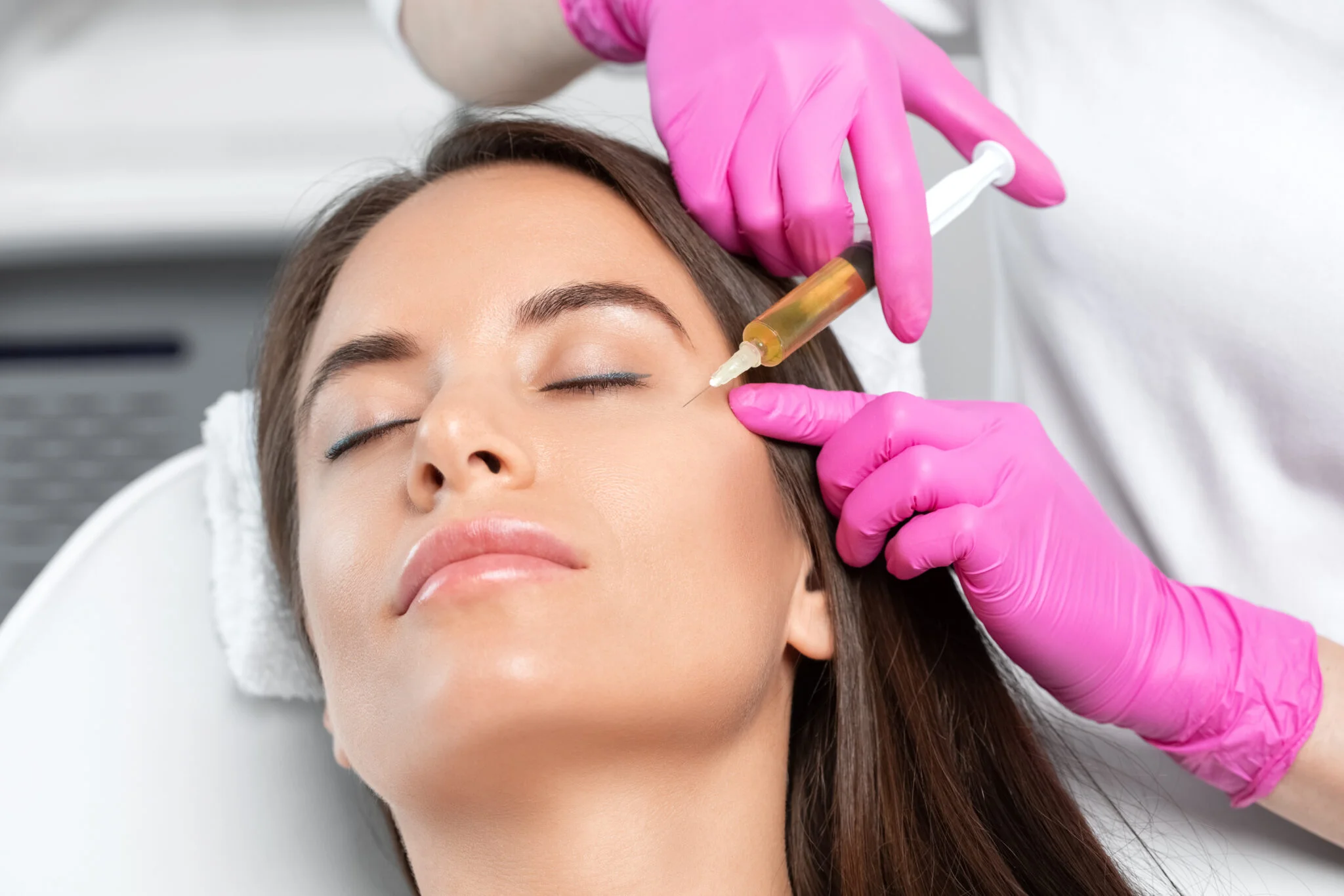
The dermal filler industry generates $2.8 billion annually in North America, yet 61% of patients express dissatisfaction with results that appear obvious, migrate from injection sites, or disappear faster than promised, leading to abandonment of treatments that could dramatically improve appearance when properly executed. This guide reveals exactly which facial areas benefit from specific filler types, realistic longevity expectations based on 20,000+ patient outcomes, and the technical approaches that distinguish natural enhancement from the overdone appearances that fuel negative stereotypes about cosmetic injections—empowering Edmonton patients to make informed decisions about filler treatments that genuinely improve rather than distort facial aesthetics.
Table of Contents:
- The Problem: Why Filler Results Often Look Unnatural or Disappoint
- What to Consider: Treatment Areas, Product Selection, and Longevity Factors
- How to Choose: Natural Results Framework and Maintenance Planning
- Marlee Patricia Aesthetics’ Natural Enhancement Philosophy
- Frequently Asked Questions
The Problem: Why Filler Results Often Look Unnatural or Disappoint
The Overfilled Epidemic
Social media’s filtered reality and celebrity transformations have normalized facial volumes that exceed natural human anatomy, creating a distorted beauty standard where 45% of filler patients request volumes that guarantee unnatural appearance. The pursuit of Instagram-perfect features leads to progressive overfilling that transforms faces into caricatures, with each treatment adding volume to already enhanced features rather than addressing underlying aging changes.
The phenomenon begins subtly with appropriate corrections that receive compliments, triggering psychological reinforcement that more volume equals more improvement. Initial treatments of 1-2 syringes addressing genuine volume loss progress to 4-6 syringes creating fullness exceeding youthful proportions. Lips that started at natural enhancement reach cartoon dimensions. Cheeks inflated beyond facial harmony create pillow face distortion. The gradual progression prevents recognition of obvious artificiality, similar to weight gain occurring slowly over time.
Provider complicity in overfilling stems from multiple factors beyond simple profit motivation:
- Patient satisfaction with dramatic changes despite unnatural appearance
- Social media promotion rewarding extreme transformations
- Competitive pressure to match other providers’ excessive volumes
- Lack of artistic training in facial aesthetics and proportions
- Fear of losing patients to providers willing to overfill
The financial implications prove devastating when overfilled patients seek correction. Dissolving hyaluronic acid fillers costs $600-$800 per session, often requiring multiple treatments. Permanent fillers creating distortion may require surgical removal costing thousands. The psychological impact of living with distorted features while awaiting correction creates lasting trauma. According to facial anatomy research, the damage to facial tissues from excessive filling may permanently alter natural contours.
The normalization of overfilled faces through media exposure shifts perception of natural appearance. Patients viewing heavily filled faces daily begin perceiving normal features as deficient. Young patients without volume loss request preventive filling that creates unnatural fullness. The cycle perpetuates as each generation establishes new baselines of artificial enhancement considered necessary for attractiveness.
The Migration and Longevity Deception
Marketing promises about filler placement stability and duration create expectations that biology cannot fulfill, with 38% of patients experiencing visible product migration and 67% reporting shorter duration than advertised, leading to frustration with treatments that shift position or require more frequent maintenance than budgets anticipated.
Filler migration occurs when products move from injection sites through facial planes, creating fullness in unintended areas that distorts natural contours. Lip filler spreading above the vermillion border creates the dreaded “duck lip” appearance. Tear trough filler migrating onto cheekbones causes puffy lower eyelids. Cheek filler descending below the malar area accentuates nasolabial folds. The hyaluronic acid properties research demonstrates that all fillers exhibit some degree of spreading based on injection technique, product selection, and anatomical factors.
Factors promoting migration that providers rarely discuss:
- Facial animation and muscle movement displacing product
- Gravity effects on large volume placements
- Lymphatic drainage patterns affecting distribution
- Sleep position compressing and shifting filler
- Exercise and heat increasing blood flow and spread
- Incorrect plane of injection allowing movement
The longevity deception begins with marketing citing maximum duration rather than typical experience. “Lasts up to 18 months” becomes the expectation despite average duration of 6-9 months in mobile areas. Metabolism variations create 3-fold differences in duration between patients. First-time filler typically lasts longer than subsequent treatments as tissues accommodate product. The discrepancy between promised and actual duration creates budget strain when maintenance costs double expectations.
Individual factors affecting duration more than product selection:
- Metabolic rate: Athletes metabolize filler 50% faster
- Area treated: Lips last 4-6 months versus cheeks at 12-18 months
- Product density: Thicker fillers last longer but look less natural
- Injection depth: Deeper placement extends duration
- Lifestyle factors: Sun exposure and smoking accelerate breakdown
The Product Selection Confusion
The overwhelming array of filler options—over 20 FDA-approved products with different densities, particle sizes, and cross-linking—creates decision paralysis while marketing emphasizes minor differences that rarely affect clinical outcomes. Patients receive different products at each appointment without understanding rationale, creating inconsistent results and unpredictable maintenance requirements.
Product characteristics creating artificial complexity:
- G-prime (firmness) measurements from 30-300 Pa
- Particle size variations from smooth gels to granular textures
- Cross-linking density affecting longevity and integration
- Hydrophilic properties determining water attraction
- Cohesivity differences affecting moldability
The technical specifications matter less than appropriate selection for specific applications. Using firm filler designed for cheekbones in delicate lips creates obvious lumps. Placing soft lip filler in cheeks provides insufficient structure. Yet providers often use available products rather than optimal selections, prioritizing inventory management over clinical excellence. The injection safety guidelines emphasize matching product properties to treatment goals.
Marketing creates brand preferences without clinical justification. Juvederm’s smooth consistency allegedly provides natural integration. Restylane’s particle technology supposedly offers precise placement. RHA’s dynamic properties claim superior movement accommodation. Clinical studies demonstrate equivalent outcomes when products are properly matched to applications. The emphasis on brand differences serves corporate differentiation rather than patient optimization.
The Technique Quality Crisis
The rapid expansion of aesthetic injectors—increasing 400% over five years—has flooded the market with minimally trained providers performing complex procedures they lack expertise to execute safely, resulting in complications, unnatural results, and patient dissatisfaction that damages industry credibility.
Training inadequacy stems from abbreviated courses providing certificates after weekend workshops without supervised practice or artistic education. Online training proliferates without hands-on experience. Dental and medical professionals add aesthetics without specialized training. The regulatory framework allows anyone with basic medical credentials to inject without proving competency. This minimal barrier to entry ensures wide variation in provider quality.
Common technique failures creating unnatural results:
- Superficial injection causing visible lumps and tenting
- Excessive product in single points rather than distributed placement
- Ignoring facial proportions and golden ratios
- Treating areas in isolation without considering overall harmony
- Using identical approaches for different facial anatomies
- Failing to account for animation and expression
The artistic component of facial aesthetics cannot be taught through technical training alone. Understanding facial proportions, light reflection, and three-dimensional contouring requires artistic sensibility developed through experience. Recognizing how volume changes affect perceived age and attractiveness demands aesthetic judgment. Creating natural enhancement while avoiding artificial appearance necessitates restraint that profit-motivated providers may lack.
Complication rates increase with inadequate training, though reporting remains voluntary and incomplete. Vascular occlusion causing tissue death or blindness represents the most severe risk, occurring in 1:6,000 injections by inadequately trained providers versus 1:40,000 with experts. Infection, granulomas, and delayed reactions affect 3-5% of patients. The aging skin studies indicate that improper technique may accelerate facial aging through tissue trauma.
What to Consider: Treatment Areas, Product Selection, and Longevity Factors
Upper Face Volume Restoration
The upper third of the face experiences volume loss that creates aging appearance through temple hollowing, brow descent, and forehead flattening, with strategic filler placement restoring youthful contours when properly executed using appropriate products and techniques.
1. Temple Hollowing Correction: Temple volume loss occurs naturally after age 30 as fat pads shrink and bone remodels, creating skeletal appearance that ages the entire upper face. The concave temples cast shadows emphasizing the skull shape while making eyes appear sunken. Proper temple augmentation using 1-2 syringes per side of medium-density filler lifts the lateral brow, opens the eye area, and restores youthful oval face shape. The treatment requires deep placement on bone or under temporalis fascia to avoid visible lumps.
Injection technique determines both safety and aesthetic outcome. The temporal region contains critical vessels including the superficial temporal artery requiring careful cannula technique or precise needle placement. Product selection favors medium-density fillers that provide structure without visibility—typically Restylane Lyft or Juvederm Voluma. Results last 12-18 months due to minimal movement in this region. The subtle improvement from temple filling often exceeds more obvious treatments in overall facial rejuvenation.
2. Forehead Contouring: Forehead volume loss manifests as flattening that emphasizes bony prominences and creates harsh appearance, particularly in lean individuals or those experiencing age-related fat atrophy. Strategic forehead augmentation using diluted hyaluronic acid filler restores gentle convexity that characterizes youth. Treatment typically requires 1-3 syringes distributed across multiple injection points to ensure smooth contouring without irregularities.
The forehead’s thin skin and proximity to muscles creating expression demand specialized technique:
- Subcutaneous or supraperiosteal placement avoiding intramuscular injection
- Low G-prime fillers preventing visible lumps
- Gradual building over multiple sessions
- Combination with neuromodulators to reduce animation
- Careful attention to natural light reflection patterns
Duration varies significantly based on placement depth and patient factors, ranging from 6-12 months. The investment of $800-$1,500 provides subtle but impactful improvement that many patients find transformative despite the understated nature of forehead enhancement.
3. Brow Support Enhancement: Strategic filler placement along the brow bone creates subtle lift and definition that opens the eye area without surgery. The technique involves placing small amounts of firm filler directly on the supraorbital rim, providing structural support that elevates descended brow tissues. This approach costs a fraction of surgical brow lifts while providing immediate improvement lasting 9-12 months.
Patient selection remains critical as not all brow concerns benefit from filler:
- Mild to moderate descent responds well to filler support
- Severe ptosis requires surgical intervention
- Heavy brows may worsen with added volume
- Asymmetry correction demands precise placement
- Young patients rarely need brow enhancement
Midface Rejuvenation Strategies
The midface represents the primary focus of facial aging correction, with strategic volume restoration in cheeks, under-eyes, and nasolabial regions creating dramatic rejuvenation when properly balanced to maintain natural proportions.
1. Cheek Augmentation Approaches: Modern cheek enhancement moves beyond simple apple augmentation to address multiple fat pad compartments that lose volume differentially with aging. The deep medial cheek fat provides anterior projection. The lateral cheek compartment creates width and contour. The submalar region fills the hollow below cheekbones. Treating these areas strategically rather than uniformly adding volume creates natural enhancement that lifts the entire midface.
Contemporary injection techniques emphasize structural support over superficial fullness:
- Deep placement on periosteum provides lift without puffiness
- Lateral vectors create natural ogee curve
- Small aliquots distributed widely prevent focal fullness
- Assessment in multiple positions ensures natural appearance
- Conservative volumes of 1-2 syringes total initially
Product selection significantly affects outcomes with firmer fillers like Voluma providing 18-24 month duration for structural support while softer products integrate naturally but require frequent maintenance. The facial volume loss patterns research confirms that addressing deep structural support before superficial augmentation creates superior, lasting results.
2. Tear Trough Refinement: Under-eye hollowing creates tired appearance that many patients prioritize for correction, yet tear trough filling represents one of the most technically challenging and complication-prone treatments requiring exceptional expertise for safe, natural results. The complex anatomy includes thin skin revealing any irregularities, minimal fat providing no camouflage, proximity to critical vessels, and lymphatic drainage promoting swelling.
Successful tear trough treatment demands careful patient selection:
- True volume loss responds well to filling
- Prominent eye bags worsen with filler
- Dark circles from pigmentation won’t improve
- Loose skin requires different interventions
- Unrealistic expectations guarantee dissatisfaction
When appropriate, treatment uses minimal product—typically 0.5cc per side of soft, low-hydrophilic filler placed deep on bone or superficially with precise technique. Results last 9-12 months though some patients experience years of improvement. The transformation from correcting under-eye hollows can be dramatic, justifying the higher complication risk when performed by experts.
3. Nasolabial Fold Management: The deep creases from nose to mouth corners result from multiple factors including midface descent, volume loss, and structural changes that simple filling cannot fully address. Modern approaches treat the cause rather than just filling the fold, with midface lifting through strategic cheek augmentation often improving nasolabial prominence more than direct treatment.
Direct nasolabial treatment when indicated uses specific techniques:
- Deep pyriform fossa support addressing root cause
- Superficial threading softening visible creases
- Combination of firm and soft products for structure and integration
- Volumes of 0.5-1cc per side avoiding overcorrection
- Gradual improvement over multiple sessions
Duration typically ranges 6-12 months depending on animation frequency and product selection. The collagen production science indicates that repeated treatments may stimulate collagen improving fold appearance beyond filler presence.
Lower Face and Perioral Enhancement
The lower face and lip region demonstrate the most obvious signs of filler treatment, requiring exceptional technique and restraint to achieve enhancement that appears natural rather than artificially augmented.
1. Lip Augmentation Refinement: Lip enhancement generates the most filler complaints due to tendency toward overcorrection, with natural augmentation requiring understanding of ideal proportions, individual anatomy variation, and animation dynamics. The golden ratio of 1:1.6 upper to lower lip provides general guidance that must be modified for individual facial proportions. Caucasian lips differ structurally from African or Asian lips, demanding different approaches.
Technique elements creating natural lip enhancement:
- Respect for individual lip architecture and proportions
- Gradual building over multiple appointments
- Focus on shape and definition over pure volume
- Attention to philtrum columns and Cupid’s bow
- Proper vermillion border definition without migration
- Balance between upper and lower lips
Product selection significantly affects lip appearance with softer fillers creating natural movement while firmer products cause stiffness. Typical treatments use 0.5-1cc total initially, building gradually to patient preference. Duration ranges 4-8 months due to constant movement and rapid metabolism in this vascular region.
Common mistakes creating unnatural lips:
- Overfilling upper lip creating “duck” appearance
- Ignoring natural lip tubercles and architecture
- Uniform filling creating sausage appearance
- Excessive projection without width balance
- Sharp vermillion border demarcation
- Failure to address perioral lines simultaneously
2. Chin and Jawline Sculpting: Strategic chin and jawline enhancement creates facial balance and definition that dramatically improves appearance, particularly in patients with weak chin projection or poor jawline definition. Modern techniques move beyond simple chin augmentation to comprehensive lower face contouring that defines the mandibular angle, straightens the jawline, and projects the chin point appropriately.
Treatment planning requires careful facial analysis:
- Profile assessment determining projection needs
- Frontal evaluation of width and symmetry
- Relationship to other facial features
- Soft tissue quality and skin laxity
- Presence of jowling or prejowl sulcus
Typical treatment uses 2-4 syringes of firm filler placed directly on bone for structural enhancement. The cannula technique reduces bruising while ensuring smooth contouring. Results last 12-24 months due to minimal animation in these regions. The dramatic improvement from proper chin and jawline enhancement often exceeds patient expectations, providing facial balance previously achievable only through surgery.
3. Marionette Line Correction: The lines extending from mouth corners toward the jawline create sad, aging appearance that patients desperately want corrected, yet simple filling often worsens the problem by adding weight to already descended tissues. Successful treatment requires understanding that marionette lines result from complex factors including volume loss, ligament laxity, and tissue descent that filling alone cannot address.
Strategic approach to marionette improvement:
- Support the lateral chin reducing downward vectors
- Lift midface structures decreasing descent
- Strengthen jawline preventing jowl formation
- Minimal direct filling only for sharp demarcation
- Combination with skin tightening procedures
When direct treatment is appropriate, placement requires precision to avoid worsening the descent or creating unnatural fullness. Small amounts of medium-density filler placed deep along the mandibular ligament provide support. Superficial threading with soft filler smooths visible demarcation. Duration varies from 6-12 months based on animation and placement depth.
Product Selection Strategy
Understanding filler characteristics enables appropriate matching to specific applications, with product properties determining both aesthetic outcomes and complication risks when improperly selected.
1. Hyaluronic Acid Filler Variations: The market offers dozens of HA fillers with properties varying across multiple parameters that affect clinical performance. G-prime (elastic modulus) ranges from 30 Pa for soft fillers to 300 Pa for structural products. Concentration varies from 15-25 mg/ml affecting longevity and lifting capacity. Cross-linking density determines duration and integration characteristics. Particle size influences smoothness and moldability.
Product categories and applications:
- Soft fillers (Restylane Silk, Juvederm Volbella): Lips, fine lines, delicate areas
- Medium density (Restylane, Juvederm Ultra): Nasolabial folds, lips, minor volumizing
- Firm fillers (Restylane Lyft, Juvederm Voluma): Cheeks, chin, structural support
- Flexible fillers (RHA collection): Dynamic areas with frequent movement
- Specialized products (Restylane Eyelight): Specific anatomical regions
The selection process must consider multiple factors beyond simple firmness:
- Injection depth and tissue characteristics
- Expected movement and animation
- Desired duration versus natural appearance
- Patient lifestyle and metabolism
- Previous filler history and response
- Budget constraints and maintenance commitment
2. Biostimulatory Filler Options: Products like Sculptra (poly-L-lactic acid) and Radiesse (calcium hydroxylapatite) stimulate collagen production while providing immediate volume, offering unique advantages for specific applications. These fillers create gradual improvement through collagen stimulation lasting 2+ years, making them economical for large volume restoration despite higher initial costs.
Sculptra applications and technique:
- Global facial volume restoration for severe atrophy
- Temple and cheek augmentation in older patients
- Gradual natural improvement avoiding sudden change
- Series of 2-3 treatments building progressive improvement
- Mixing protocol and injection technique critical for outcomes
Radiesse provides immediate correction with long-term collagen benefits but requires careful patient selection due to non-reversible nature. The skin health fundamentals research indicates biostimulatory fillers may provide superior long-term value through tissue regeneration beyond simple volume replacement.
How to Choose: Natural Results Framework and Maintenance Planning
Natural Enhancement Principles
Achieving filler results that enhance rather than distort requires understanding facial aesthetics, respecting individual anatomy, and exercising restraint that prioritizes natural appearance over dramatic transformation.
1. The Golden Ratios and Facial Proportions: Classical beauty proportions provide guidelines that must be interpreted through individual variation rather than rigid application. The facial thirds (hairline to brow, brow to nose base, nose base to chin) should be approximately equal, though deviation creates character. The facial fifths (divided vertically by eye width) guide lateral proportions. The golden ratio of 1.618 appears throughout attractive faces but forcing these proportions creates artificial appearance.
Individual variation requires modified approaches:
- Ethnic differences in ideal proportions
- Age-appropriate expectations versus youth ideals
- Gender variations in desired features
- Personal preferences and cultural beauty standards
- Existing facial harmony and balance
The artistic eye recognizes when enhancement improves versus distorts natural proportions. Adding volume to already full features creates imbalance. Treating areas in isolation ignores facial harmony. Chasing perfection through excessive filling destroys individual character that makes faces interesting and attractive.
2. Volume Distribution Strategy: Natural facial aging involves predictable volume shifts that guide restoration approaches—fat descends from upper face to lower, creating hollow temples and heavy jowls. Successful rejuvenation reverses these changes through strategic redistribution rather than uniform inflation. The “lift and fill” philosophy emphasizes structural support before superficial volume, creating elevation that reduces perceived heaviness.
Strategic volume placement principles:
- Replace volume where it was lost, not where wrinkles appear
- Build structure deeply before adding superficial fullness
- Distribute product widely rather than focal deposits
- Respect facial zones and compartments
- Consider three-dimensional effects and light reflection
- Maintain animation and expression capability
The gradual approach over multiple sessions enables natural integration and adjustment. Initial treatments establish foundation with structural support. Subsequent sessions refine and perfect based on healing and patient feedback. This methodical building prevents the overfilled appearance resulting from aggressive single sessions attempting complete correction.
3. Movement and Expression Preservation: Faces communicate through complex movements that filler must accommodate rather than restrict. Overfilling or inappropriate product selection creates stiffness that broadcasts artificial enhancement regardless of static appearance. Natural results require careful consideration of animation patterns and product properties that maintain fluid movement.
Techniques preserving natural animation:
- Using flexible fillers in mobile areas
- Avoiding overfilling that restricts movement
- Placing product in planes that accommodate motion
- Distributing volume to prevent focal restriction
- Selecting appropriate G-prime for tissue characteristics
- Testing animation during treatment
The facial anatomy research emphasizes that successful filler treatment enhances appearance during animation rather than creating perfect static features that appear bizarre during expression.
Treatment Planning and Sequencing
Comprehensive facial rejuvenation rarely involves single-session correction, with strategic planning and appropriate sequencing creating superior outcomes while managing costs and minimizing complications.
1. The Assessment and Prioritization Process: Initial consultation must evaluate global facial aging rather than focusing on specific complaints, as patients often misidentify their primary concerns. The patient requesting lip filler may actually need midface lifting that makes lips appear fuller. Under-eye complaints might resolve with cheek augmentation. Perceived nose size may reflect weak chin projection. This comprehensive assessment guides treatment prioritization addressing root causes rather than secondary effects.
Prioritization factors include:
- Areas creating greatest aging impact
- Patient’s primary concerns and budget
- Structural support requirements
- Safety considerations and risk management
- Expected longevity and maintenance needs
- Combination treatment opportunities
Documentation through standardized photography enables objective treatment planning. Multiple angles in consistent lighting reveal asymmetries and volume deficits invisible in mirrors. Digital imaging demonstrates potential outcomes helping patients understand recommendations. This systematic approach prevents haphazard treatments creating imbalanced results.
2. Staging Complex Corrections: Large volume corrections require staging over multiple appointments for safety and natural integration. Attempting complete facial rejuvenation in single sessions risks complications from excessive product, swelling obscuring outcomes, and inability to assess and adjust. The staged approach enables gradual improvement that appears natural to observers while allowing refinement based on healing.
Typical staging progression:
- Foundation (Months 1-2): Structural support in temples, cheeks, chin
- Refinement (Months 3-4): Under-eyes, nasolabial folds, prejowl
- Enhancement (Months 5-6): Lips, fine lines, final touches
- Maintenance (Ongoing): Touch-ups maintaining results
This systematic building creates balanced improvement while spreading costs over time. Each session builds upon previous results, enabling adjustment based on tissue response and patient feedback. The gradual transformation avoids dramatic change that shocks social circles while achieving significant cumulative improvement.
3. Combination Treatment Integration: Optimal facial rejuvenation combines multiple modalities addressing different aging mechanisms simultaneously. Neuromodulators relax muscles creating dynamic wrinkles. Fillers restore volume and structure. Biostimulators improve skin quality. Energy devices tighten lax tissues. This synergistic approach creates improvement exceeding individual treatments while potentially reducing filler requirements.
Strategic combinations and timing:
- Neuromodulators 2 weeks before filler for stable muscle position
- Biostimulators alternating with HA filler for sustained improvement
- Skin resurfacing between filler sessions for texture refinement
- Thread lifts providing support reducing filler volume needs
- Surgical procedures establishing foundation for filler refinement
The injection safety guidelines recommend careful timing between procedures ensuring optimal healing and outcome assessment before additional interventions.
Maintenance and Longevity Optimization
Filler maintenance represents ongoing investment requiring strategic planning to sustain results efficiently while managing costs and preventing the cyclic overfilling that creates unnatural appearance.
1. Understanding Degradation Patterns: Hyaluronic acid fillers don’t suddenly disappear but gradually degrade through enzymatic breakdown and mechanical forces. Initial volume loss of 20-30% occurs within weeks from fluid shifts and inflammation resolution—not product loss. Gradual degradation follows predictable patterns based on area treated, product characteristics, and individual factors. Understanding these patterns enables proactive maintenance before complete resolution.
Factors accelerating filler breakdown:
- High metabolism and athletic activity
- Excessive animation and muscle movement
- Sun exposure and heat increasing enzyme activity
- Smoking affecting tissue quality and healing
- Certain medications and supplements
- Inflammation from illness or dental work
Regular assessment every 3-4 months identifies areas requiring touch-up before obvious volume loss. This proactive approach maintains consistent appearance using smaller product volumes than allowing complete resolution before retreatment. The steady-state maintenance typically requires 50-70% of initial correction volumes annually.
2. The Touch-Up Strategy: Strategic touch-ups maintain results more efficiently than complete re-treatment cycles. Adding small amounts of filler as previous product degrades prevents the valley-peak cycle of allowing complete resolution. This approach offers multiple advantages including consistent appearance without periodic deflation, lower per-session costs, reduced swelling and downtime, and ability to refine and perfect results gradually.
Touch-up timing varies by area:
- Lips: Every 4-6 months with 0.5cc
- Tear troughs: Annual with 0.25-0.5cc per side
- Cheeks: Every 12-18 months with 1 syringe
- Chin/Jawline: Every 18-24 months with 1-2 syringes
- Temples: Annual with 0.5-1cc per side
Documenting individual patterns enables personalized maintenance schedules. Some patients metabolize filler rapidly requiring frequent touch-ups while others maintain results for years. Tracking enables evidence-based planning rather than arbitrary scheduling.
3. Preventing Overcorrection Cycles: The tendency toward progressive overfilling develops subtly as patients become accustomed to enhanced features and perceive normal degradation as deficiency. Each treatment adds slightly more product seeking previous fullness levels. Gradual accumulation creates obvious artificiality that patients no longer recognize, similar to weight gain occurring imperceptibly over time.
Strategies preventing overfilling:
- Comparing current photos to pre-treatment baseline
- Limiting annual filler volume to established maximums
- Allowing periodic complete resolution for reset
- Seeking second opinions when requesting increased volumes
- Focusing on quality and placement over quantity
- Recognizing when surgical intervention becomes appropriate
Managing Expectations and Complications
Realistic expectations and comprehensive understanding of potential complications enable informed consent while establishing trust that encourages patients to report problems promptly for optimal management.
1. Setting Realistic Outcomes: Filler cannot replicate surgical results despite marketing suggestions otherwise. The “liquid facelift” provides improvement but won’t match surgical lifting. Significant skin laxity requires excision not inflation. Genetic features like weak chin structure need implants for dramatic change. Understanding limitations prevents expensive disappointment while identifying candidates benefiting from alternative procedures.
Common unrealistic expectations requiring correction:
- Complete wrinkle elimination from volume alone
- Permanent results from temporary fillers
- Dramatic transformation from minimal product
- Reversal of decades of aging instantly
- Creation of features genetically absent
- Maintenance-free lasting improvement
Honest discussion about achievable outcomes builds trust while preventing dissatisfaction. Before-after photos of similar patients demonstrate realistic possibilities. Written estimates outlining required product volumes and costs prevent surprise expenses. Clear explanation of maintenance requirements ensures commitment understanding.
2. Complication Recognition and Management: While serious complications remain rare with experienced injectors, understanding potential problems enables early recognition and prompt treatment minimizing long-term consequences. Bruising and swelling represent expected side effects rather than complications, resolving spontaneously within 7-14 days. True complications require intervention ranging from massage to dissolution or surgical correction.
Immediate complications requiring urgent attention:
- Vascular occlusion: Severe pain, blanching, mottled discoloration
- Infection: Increasing pain, redness, warmth, fever
- Allergic reaction: Widespread swelling, rash, breathing difficulty
Delayed complications developing over weeks to months:
- Nodules and granulomas from inflammatory reaction
- Biofilms causing chronic low-grade infection
- Migration creating contour irregularities
- Tyndall effect showing blue discoloration
- Persistent edema from lymphatic disruption
The aging skin studies emphasize that prompt recognition and appropriate treatment of complications prevents permanent sequelae while maintaining patient trust through transparent communication.
Marlee Patricia Aesthetics’ Natural Enhancement Philosophy
Comprehensive Facial Assessment
Marlee Patricia Aesthetics begins every filler journey with thorough evaluation examining global facial aging patterns rather than isolated concerns, ensuring treatments address root causes while maintaining natural harmony that enhances individual beauty rather than creating generic appearances.
The assessment process evaluates facial structure, volume distribution, and aging patterns unique to each patient. Years of experience enable Marlee to recognize how different faces age and respond to volume restoration. Digital photography from multiple angles reveals asymmetries and volume deficits that mirrors cannot show. This detailed analysis guides treatment planning that respects individual anatomy while achieving desired improvements.
Understanding goes beyond simple volume replacement to consider how facial features interact dynamically. The relationship between cheek projection and nasolabial depth, chin position and lip proportions, and temple volume and brow position all influence treatment strategy. This interconnected approach ensures that enhancing one area doesn’t create imbalance elsewhere. Marlee’s nursing background provides medical expertise while her aesthetic training enables artistic vision combining safety with beauty.
Patient education forms a cornerstone of the consultation process. Clear explanation using anatomical models demonstrates how volume loss creates aging appearance and how strategic restoration reverses these changes. Before-after photos of similar patients with comparable anatomy set realistic expectations. Discussion of product options, longevity expectations, and maintenance requirements ensures informed decision-making. This educational approach empowers patients to participate actively in treatment planning rather than passively accepting recommendations.
Conservative Building Approach
The practice philosophy emphasizes gradual enhancement through conservative treatment building natural results over time rather than aggressive single-session transformations that risk unnatural appearance or complications.
Initial treatments establish foundation with minimal product strategically placed for maximum impact. Using 1-2 syringes initially rather than 4-5 enables assessment of tissue response and patient satisfaction before committing to larger volumes. This cautious approach prevents overcorrection while allowing refinement based on healing and feedback. Patients appreciate the gradual improvement that appears natural to observers rather than sudden dramatic change.
The building process follows logical progression addressing structural support before superficial enhancement. Deep volume restoration in temples and cheeks provides lifting that improves multiple areas simultaneously. Once foundation establishes, superficial refinements in lips and fine lines complete the rejuvenation. This systematic approach creates balanced, harmonious results impossible with haphazard spot treatments.
Documentation at each stage enables objective assessment of progress and planning for subsequent treatments. Photos taken in standardized lighting and positions reveal subtle improvements patients might not perceive. Treatment notes recording product types, volumes, and placement locations guide future sessions. This meticulous record-keeping ensures consistent, progressive improvement toward aesthetic goals while preventing overcorrection through careful monitoring.
Advanced Injection Techniques
Marlee’s extensive training and experience with multiple filler types enables advanced techniques optimizing results while minimizing discomfort and complications through precise product placement using methods refined over thousands of treatments.
Cannula techniques for appropriate areas reduce trauma, bruising, and vessel injury risk while enabling smooth product distribution. The blunt-tip cannula navigates tissue planes without cutting, creating natural results with minimal downtime. Strategic entry points access multiple areas through single punctures, reducing discomfort. This advanced technique requires exceptional skill but provides superior outcomes for experienced practitioners.
Needle techniques remain essential for precise placement in certain anatomies. The sharp needle enables exact positioning in tear troughs, lips, and fine lines where cannulas lack precision. Marlee’s technique minimizes discomfort through gentle, confident injection with appropriate anesthesia. Understanding when to use needles versus cannulas optimizes both safety and outcomes.
Product layering techniques create natural, lasting results by placing different fillers at various depths. Firm products on bone provide structure while softer fillers in superficial planes smooth fine lines. This sophisticated approach requires deep understanding of product properties and tissue characteristics. The hyaluronic acid properties research confirms that strategic layering extends duration while maintaining natural appearance.
Long-Term Relationship Building
Marlee Patricia Aesthetics views filler treatment as an ongoing partnership focused on maintaining natural enhancement through careful monitoring and adjustment rather than episodic interventions creating inconsistent results.
Regular follow-up appointments assess treatment longevity and identify areas requiring touch-up before obvious volume loss occurs. These maintenance visits enable small adjustments maintaining consistent appearance rather than allowing complete degradation requiring larger corrections. The established relationship facilitates honest communication about results and goals, ensuring treatments continue meeting patient expectations.
Treatment records accumulated over time reveal individual response patterns guiding optimization. Some patients consistently require touch-ups at four months while others maintain results for a year. Understanding these patterns enables personalized maintenance schedules and accurate cost projections. This data-driven approach replaces guesswork with evidence-based planning.
The long-term perspective prevents the progressive overfilling trap through objective monitoring against baseline photos. When patients request increased volumes, comparison to original appearance provides perspective on achieved improvement. This reality check maintains natural results while identifying when surgical options become more appropriate than continued filling. The commitment to natural enhancement sometimes means declining requests that would create artificial appearance, prioritizing long-term satisfaction over short-term profits.
Frequently Asked Questions
1. How much filler do I actually need for natural-looking results?
Natural-looking results typically require far less filler than patients expect, with most faces benefiting from 2-3 syringes strategically placed rather than 5-8 syringes creating obvious enhancement, though individual needs vary based on age, anatomy, and aesthetic goals. Initial treatments should start conservatively with 1-2 syringes addressing primary concerns, building gradually over subsequent sessions to achieve desired improvement without overcorrection. The facial volume loss patterns research demonstrates that strategic placement of smaller volumes often creates better outcomes than aggressive filling that distorts natural proportions.
2. Which areas should I prioritize if I can't afford full facial rejuvenation?
Prioritizing treatments that provide maximum impact within budget constraints typically means addressing structural support in cheeks and temples first, as these areas create lifting that improves multiple concerns simultaneously including nasolabial folds, jowls, and tired appearance. The midface represents the cornerstone of facial rejuvenation with 2-3 syringes creating dramatic improvement exceeding the same volume distributed across multiple smaller areas. Individual priorities vary based on specific aging patterns, but investing in foundation before details ensures balanced, natural enhancement that can be refined over time as budget allows.
3. How can I tell if my injector is recommending too much filler?
Red flags suggesting excessive filler recommendations include pressure for same-day treatment without thinking time, quotes exceeding 4-5 syringes for initial treatment, promises of dramatic transformation from single sessions, focus on trendy looks rather than your anatomy, reluctance to show before-after photos of their work, and dismissal of concerns about looking overdone. Reputable injectors prioritize natural results through conservative approaches, provide honest assessments of achievable outcomes, and respect patient autonomy in treatment decisions. Trust your instincts if recommendations seem excessive—seeking second opinions protects against overcorrection that creates artificial appearance.
4. Why do my filler results not last as long as advertised?
Advertised filler duration represents maximum longevity under ideal conditions rather than typical experience, with actual duration affected by metabolism rate (athletes metabolize 50% faster), treatment area (lips last 4-6 months versus cheeks at 12-18 months), product dilution affecting concentration, injection technique and depth, lifestyle factors like sun exposure, and individual enzyme activity. Marketing emphasizes best-case scenarios while clinical reality shows average duration of 6-9 months for most areas, requiring honest discussion about maintenance costs. The skin health fundamentals indicate that setting realistic expectations about duration prevents disappointment while enabling appropriate maintenance planning.
5. Can filler migration be prevented or corrected?
Filler migration can be minimized through proper technique including appropriate product selection for specific areas, correct injection depth and plane, avoiding excessive volumes, respecting tissue planes and compartments, and allowing adequate healing between treatments. Once migration occurs, correction options include targeted hyaluronidase dissolution, manual redistribution in early stages, waiting for natural degradation, or surgical removal in severe cases. Prevention through conservative treatment with experienced injectors remains superior to correction after problems develop, as complete resolution of migrated filler may prove challenging even with dissolution.